What Is Digital Smile Design? A Guide for Dental Practices
Digital smile design plans cosmetic treatment from photos and video of the patient’s face. How it works, its benefits and limits, and the software used.
By the Your Social Smile teamPublished 4 min read
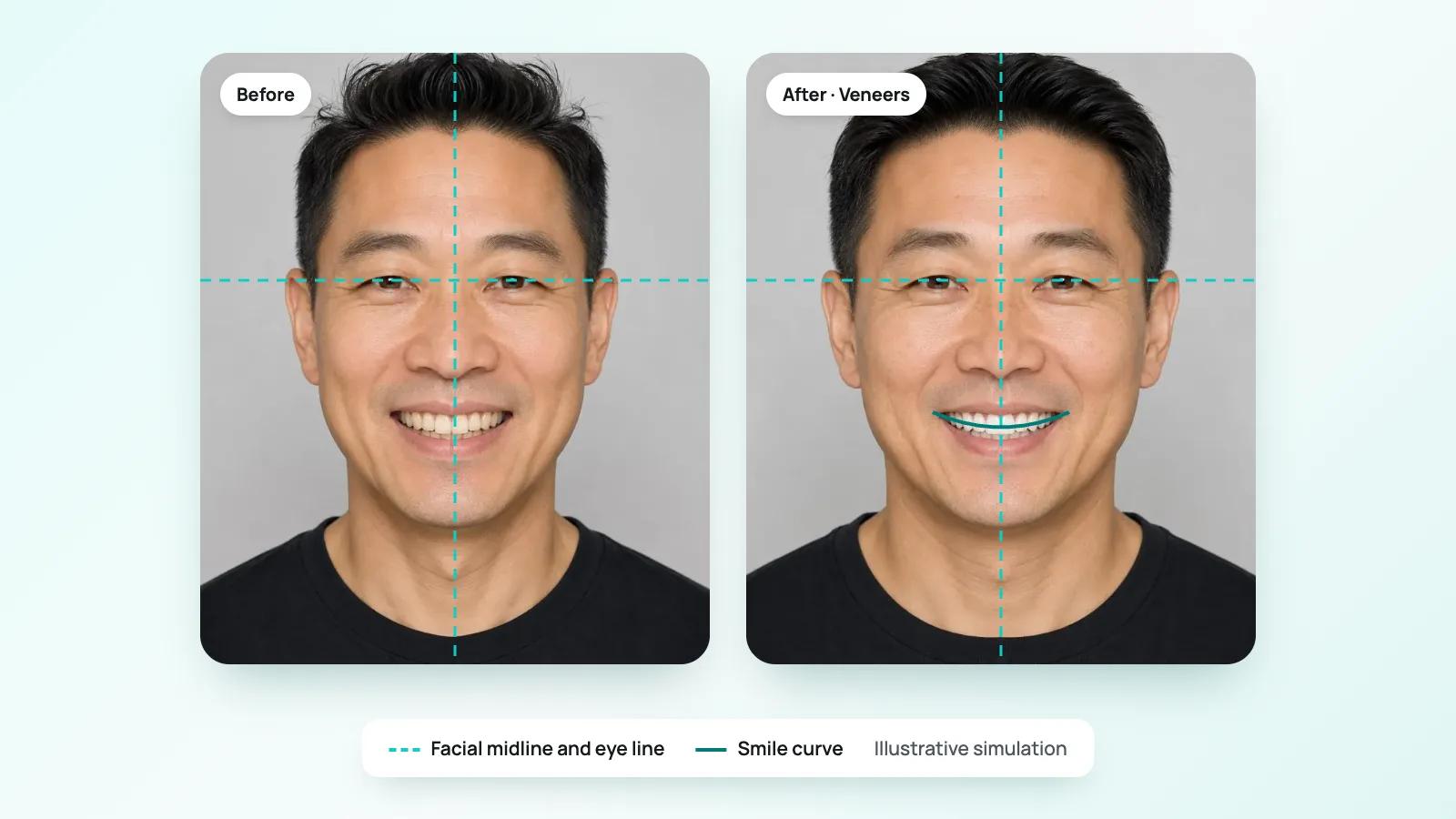
Digital smile design (DSD) is a way of planning cosmetic dental treatment from photographs and video of the patient’s face. The new smile is designed against the face first, then shared with the patient and the lab, so everyone agrees on the result before any tooth is prepared.
Christian Coachman and Marcelo Calamita described the method in a 2012 paper, “Digital Smile Design: A Tool for Treatment Planning and Communication in Esthetic Dentistry”, published in Quintessence of Dental Technology. The name now covers both the general technique and the company and app built around it. This guide is about the technique.
How does digital smile design work?
The details vary by practice and software. Most DSD workflows follow the steps described in a 2020 review in the Journal of Oral Biology and Craniofacial Research.
- Photos and video. The team takes a standard set of facial and dental photographs, plus video of the patient smiling, laughing and talking, because a smile is judged in motion as well as at rest.
- Reference lines. A vertical facial midline is drawn through the forehead, nose and chin, with horizontal lines through the pupils and the corners of the mouth. The teeth are then planned against the face instead of against each other.
- Tooth design. The width, length and edge position of the front teeth are drawn digitally, with the lips and face as the frame.
- Mock-up. The design becomes a wax-up, and a temporary mock-up made from it can be tried in the mouth. The patient sees and feels the new shape before anything is permanent.
- Lab handover. The technician receives the design together with what the patient said they wanted from the shape, arrangement and color of their teeth.
- Treatment. The agreed design guides the veneers, crowns, orthodontics or gum work that follows.
What are the benefits of digital smile design?
The main benefit is communication. The patient sees a proposed result on their own face. The dentist can show why a tooth should be longer or a midline should move. The lab works toward a picture of the goal instead of a written prescription.
The research is encouraging but thin. A 2025 systematic review of seven studies found that DSD “consistently improved patient satisfaction, treatment acceptance, communication, and perceived predictability” compared with conventional planning. The same authors note that the studies were small and measured different outcomes, so the size of the effect is uncertain. If acceptance is the number you care about, our guide to dental case acceptance covers how to measure it.
What are the limits of digital smile design?
DSD is a planning and communication tool, and it does not replace a diagnosis. The plan still rests on a clinical exam, medical and dental history, radiographs and models or scans, as Coachman and colleagues set out in a 2017 paper on the workflow.
It also depends on good images. Reviews point out that poor or distorted photographs can mislead the plan, that working from 2D photos needs careful calibration, and that the software takes training, which adds time and cost (Jafri and colleagues, 2020; Omar and Duarte, 2018).
For those reasons DSD earns its time on veneers, multiple crowns and full smile makeovers. On a single anterior filling it is usually more process than the case needs.
Which software is used for digital smile design?
Several dedicated tools exist, and many connect to an intraoral scanner or to dental CAD software. Four examples, described from their makers’ own product pages:
| Tool | Made by | What it does |
|---|---|---|
| DSD App | Digital Smile Design | A 2D tool for the first study of a case and for adjusting the smile design |
| Smilecloud | Smilecloud | Builds a facially aligned smile design from a photo, with a video simulation and a shared case for the team |
| TRIOS Smile Design | 3Shape | Shows a designed treatment outcome on the patient’s own photos |
| Smile Creator | exocad | A smile design module inside exocad’s DentalCAD software |
All four are clinical tools. They are used by the dentist or the technician during treatment planning, after the patient has come in for an exam.
Is digital smile design the same as a smile simulator?
No. They answer different questions at different points. Digital smile design is how a clinician plans a case. A smile simulator answers the question a patient has before they book, which is what a treatment would look like on them.
| Digital smile design | Smile simulator | |
|---|---|---|
| Who uses it | The dentist and the lab | The patient, on their own |
| When | After the exam, during treatment planning | Before the first appointment |
| What it starts from | Facial and dental photos, video and scans | One photo or the phone camera |
| What it produces | A treatment design the lab can build | A preview of the treatment on the patient’s face |
| What it is for | Planning and agreeing the final result | Helping the patient decide to book |
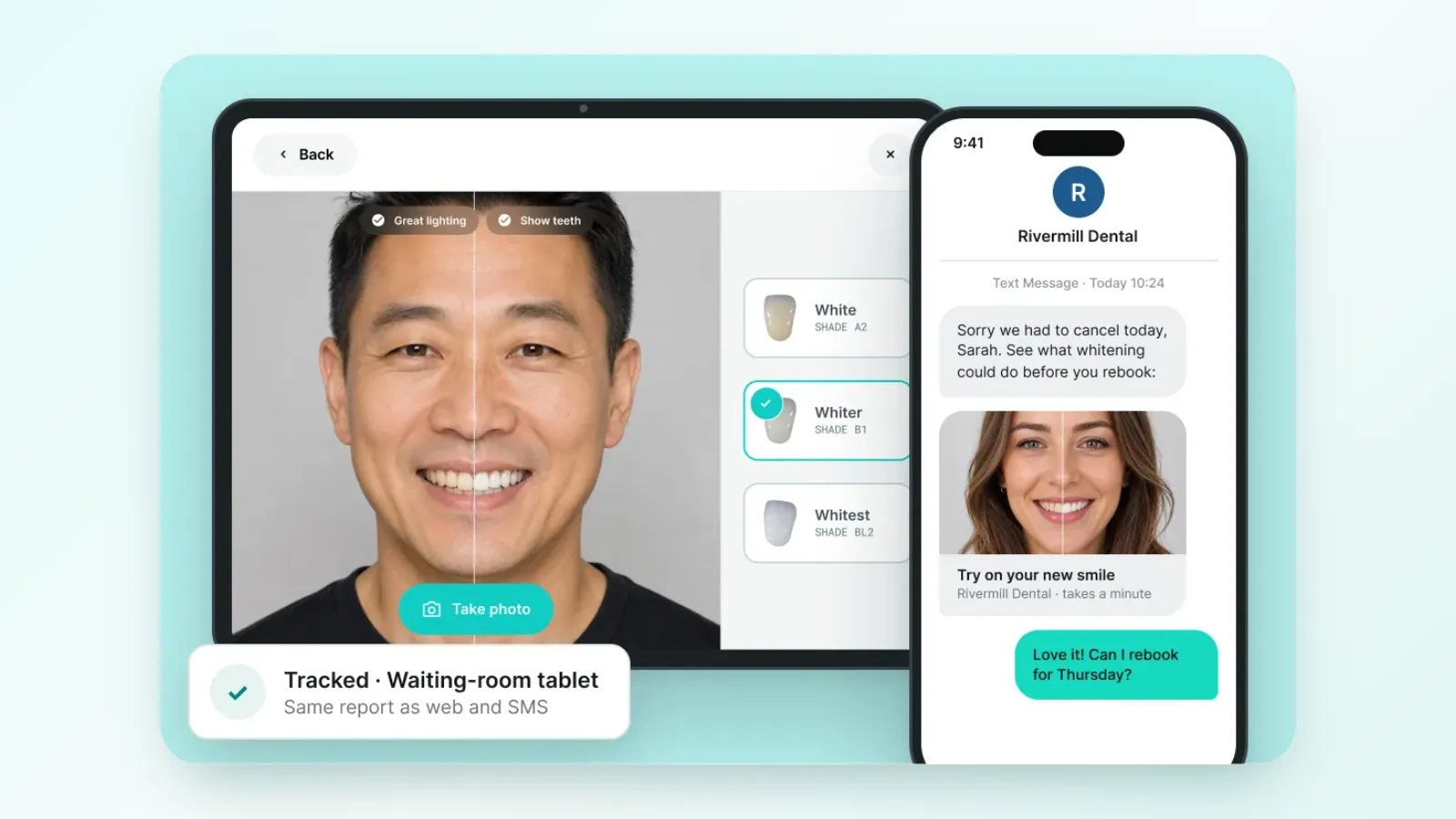
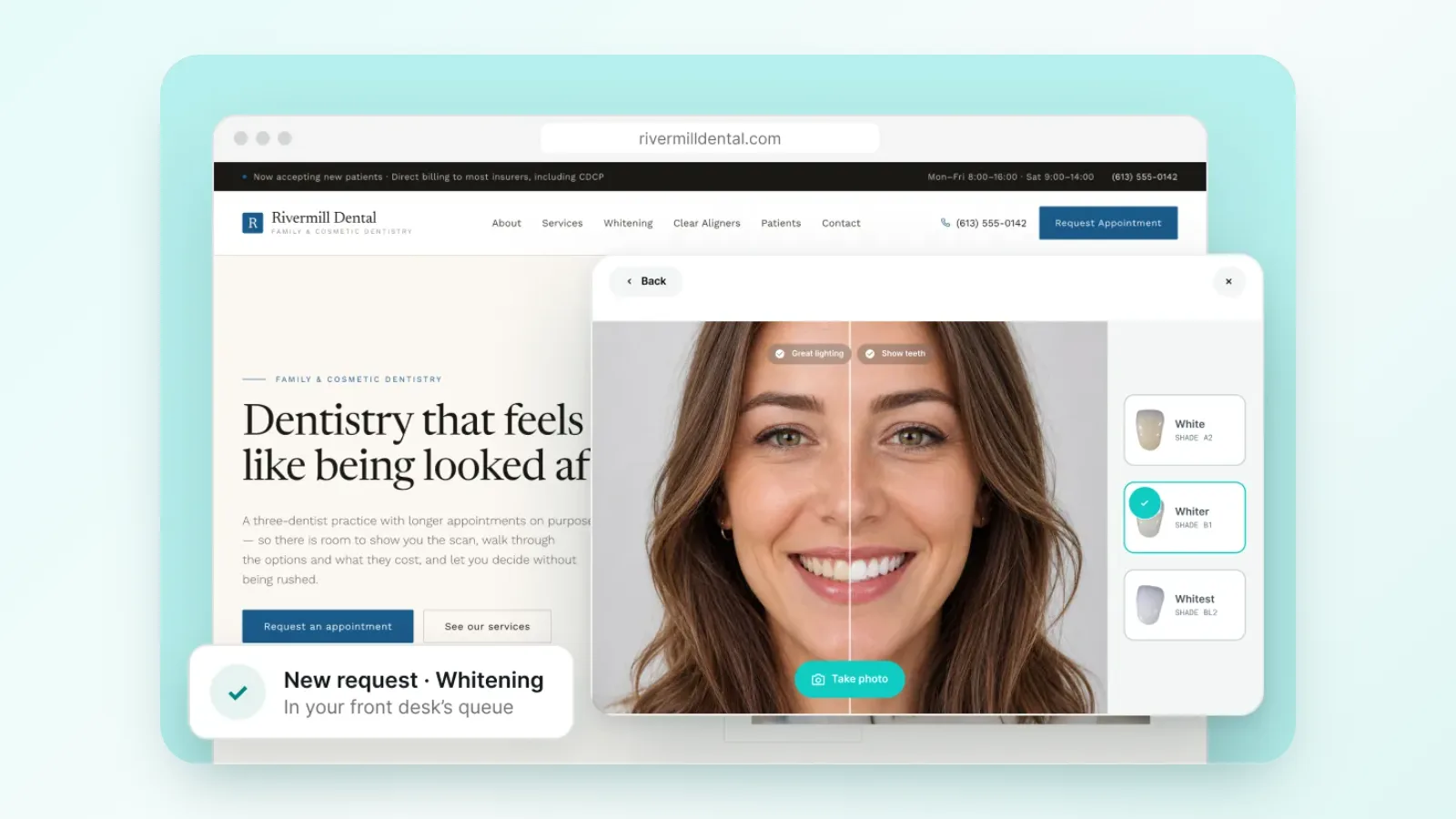
Your Social Smile is a smile simulator. Patients try whitening, veneers, braces and other treatments on their own photo, on the practice’s website or a waiting-room tablet, and the booking request reaches the front desk with the before and after attached. On the veneers simulator, a patient takes one photo and sees a new set of veneers on their own teeth in about a minute.
A simulation is a preview. It starts the conversation, and digital smile design finishes it. A patient who has already seen veneers on their own face can come to the consultation ready to talk about shape and shade, which is where the clinical design work begins.
Should your practice use digital smile design?
If you treat a steady number of veneer, crown or smile makeover cases, DSD is worth learning. The patient gets a clear picture of the plan, the lab gets a clear target, and you keep a record of what was agreed. If most of your esthetic work is whitening and single restorations, a full DSD workflow may cost more time than it saves.
Questions about digital smile design
How long does digital smile design take?
It depends on the case, the software and the lab. The photos and video are quick to take. Most of the time goes into the design itself and, when one is made, the wax-up and the mock-up.
Is digital smile design only for veneers?
No. It is most associated with veneers and crowns on the front teeth, and the same facial analysis is used when planning orthodontic, gum and implant work in the smile zone.
Can patients do digital smile design themselves?
Not the clinical version. Patients can preview a treatment on their own photo with a smile simulator, which is a separate and earlier step. To see what that looks like for your patients, run three free test simulations on your own patient photos.