Dental Case Acceptance: How to Measure and Improve It
Case acceptance is the share of recommended treatment patients agree to. How to measure it, why patients say no, and what practices can do about it.
By the Your Social Smile teamPublished 4 min read
Dental case acceptance is the share of recommended treatment that patients agree to go ahead with. If a practice presents ten treatment plans in a month and six are scheduled, its case acceptance rate for that month is 60% by count.
How do you calculate case acceptance?
There are two common ways to measure it, and they tell you different things.
| Measure | Formula | What it tells you |
|---|---|---|
| By count | Plans accepted ÷ plans presented | How often patients say yes |
| By value | Value of treatment accepted ÷ value of treatment presented | How much of the dentistry you diagnose gets done |
A practice can look healthy by count and weak by value. Patients often accept the small, urgent items and defer the larger elective ones, so it helps to track both and to split them by treatment type and by provider.
Decide what counts before you start. A presented plan should mean one the patient was actually walked through. An accepted plan can mean agreed in the chair, scheduled or started, and each gives a different number. Pick one definition, write it down and keep it, so the trend means something.
What is a good case acceptance rate?
There is no reliable industry figure. The numbers in circulation come from consultancies and software vendors without published methods, and they disagree. A 2016 Levin Group survey put the national average at 61%, while Henry Schein One’s 2026 figures put it at 45% of presented treatment plans. We could not find an ADA or peer-reviewed benchmark for general practice.
The useful benchmark is your own. Measure the same way every month, by treatment, and watch whether the number moves after you change how you present.
Why do patients say no to treatment?
Cost
Cost is the barrier patients name most. In an ADA Health Policy Institute brief, the three most common barriers to dental care that people reported were all about money, and the Institute later found that 13% of people reported cost barriers to dental care in 2022, against 4 to 5% for other kinds of health care.
Fear
According to the Cleveland Clinic, about 36% of people in the US fear dental treatment and 12% have an extreme fear. A patient who dreads the chair will find reasons to delay. We wrote more about dental anxiety and how technology can ease it.
They can’t picture the result
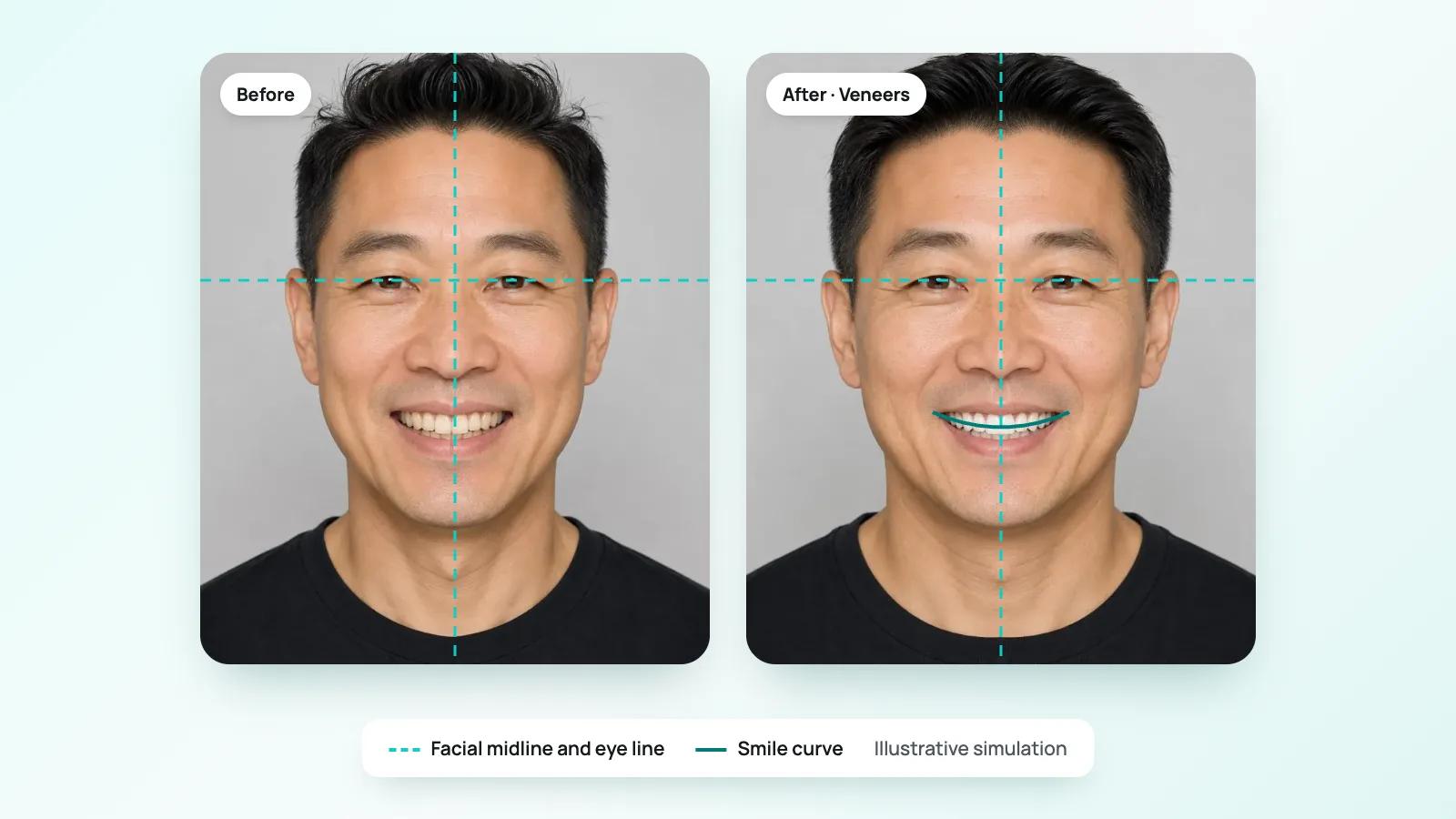
Treatment plans are written in clinical terms, and most patients can’t imagine what four upper veneers will look like on their face. Elective treatment is something the patient has to want, and it is hard to want something you can’t see.
Timing and trust
Some patients agree in principle and never schedule. Nothing feels urgent, the cost has to be planned for, or they want a second opinion. These are the cases a good follow-up wins back.
How can a practice improve case acceptance?
Show the outcome
Visual aids help patients understand what is being proposed. In a 2026 randomized trial in Scientific Reports, patients shown a digital smile simulation reported higher understanding, confidence and willingness to go ahead than a control group. The trial was small, with 60 patients, and it measured what patients said instead of what they went on to book.
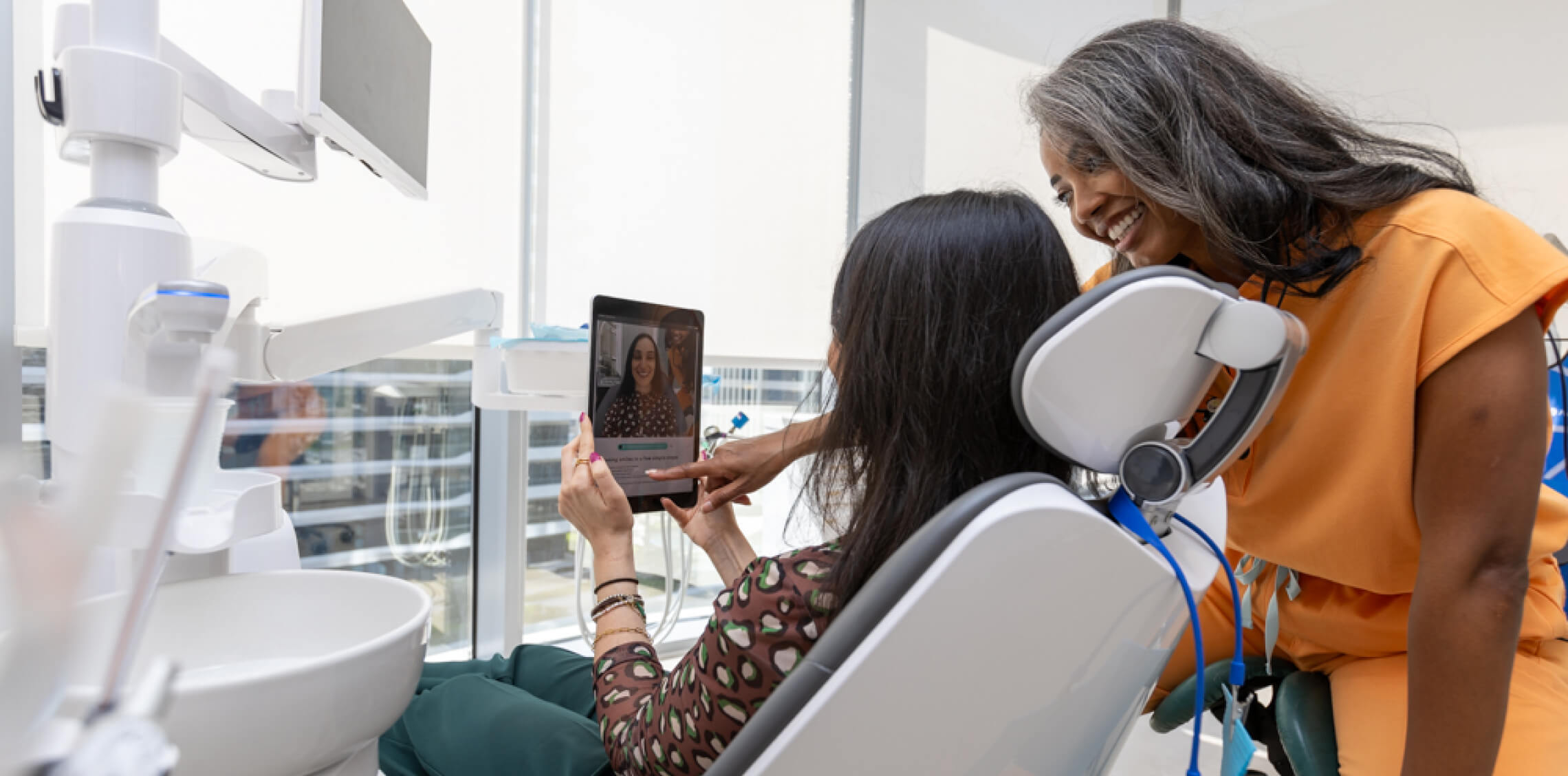
Intraoral photos, scans, mock-ups and simulations all do this job. Use whichever lets the patient see their own mouth and their own face.
Talk about cost early and plainly
Give a written fee, explain what insurance is likely to cover, and offer phased treatment or financing where you can. A surprise about cost at the front desk can undo a good consultation.
Offer options
Present the recommended plan and, where it is clinically sound, a phased or simpler alternative. A patient who can say yes to part of the plan today can come back for the rest later.
Let the patient take it home
Large elective decisions are often made at home, with a partner. Send the plan, the fee and any images home with the patient, so the conversation can continue after they leave.
Follow up, and hand over well
Agree who calls the patient and when. The handover from clinician to front desk is where an accepted plan can quietly go unscheduled, so give the front desk the plan, the fee and the patient’s main concern before they pick up the phone.
Measure it by treatment
Track acceptance by count and by value, per treatment and per provider, every month. Change one thing at a time so you can tell what worked.
Where a smile simulator fits
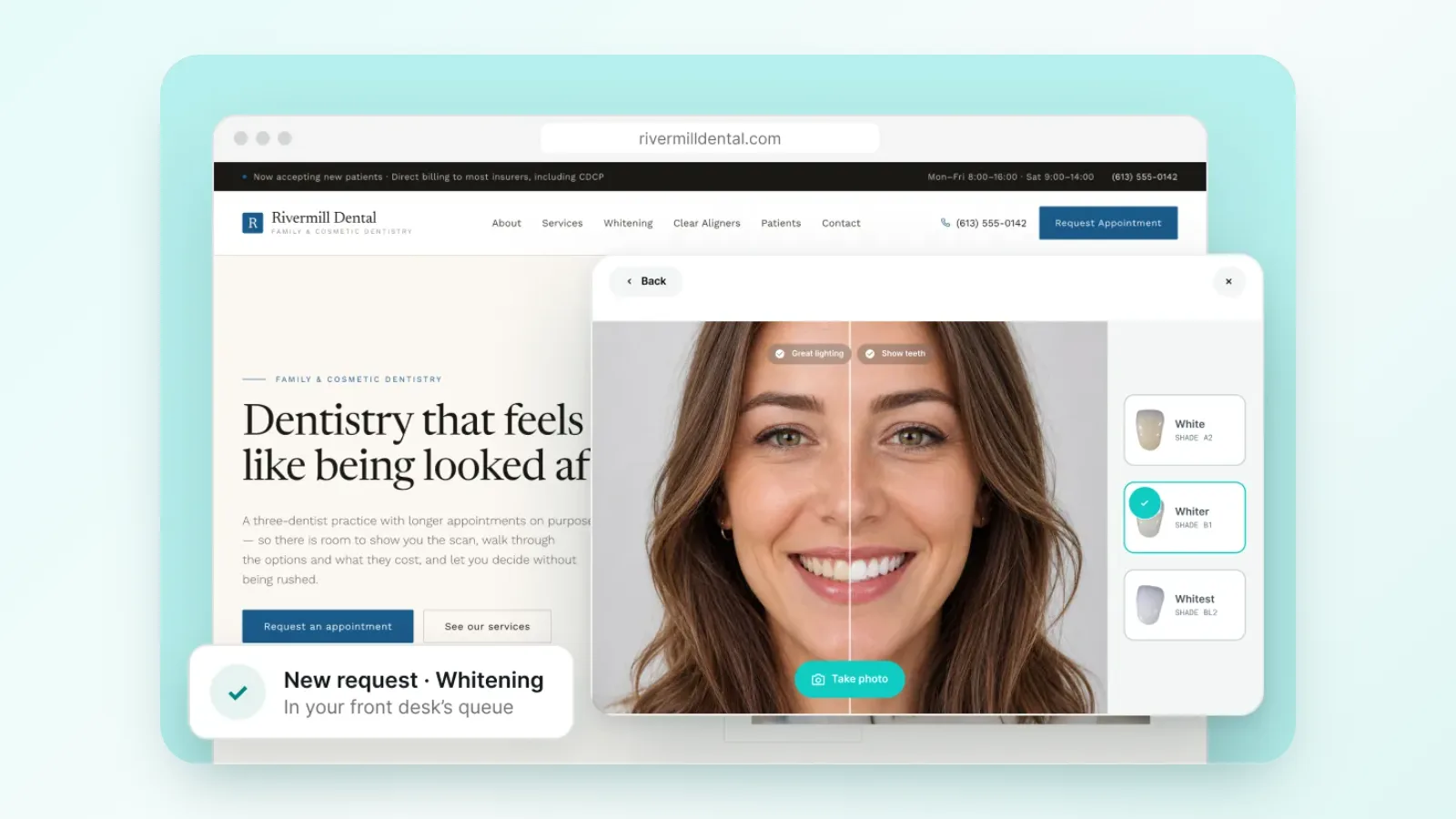
Part of case acceptance happens before the consultation. A patient who has already tried whitening or veneers on their own face arrives with a clearer idea of what they want, so the consultation can start from the result instead of the procedure.
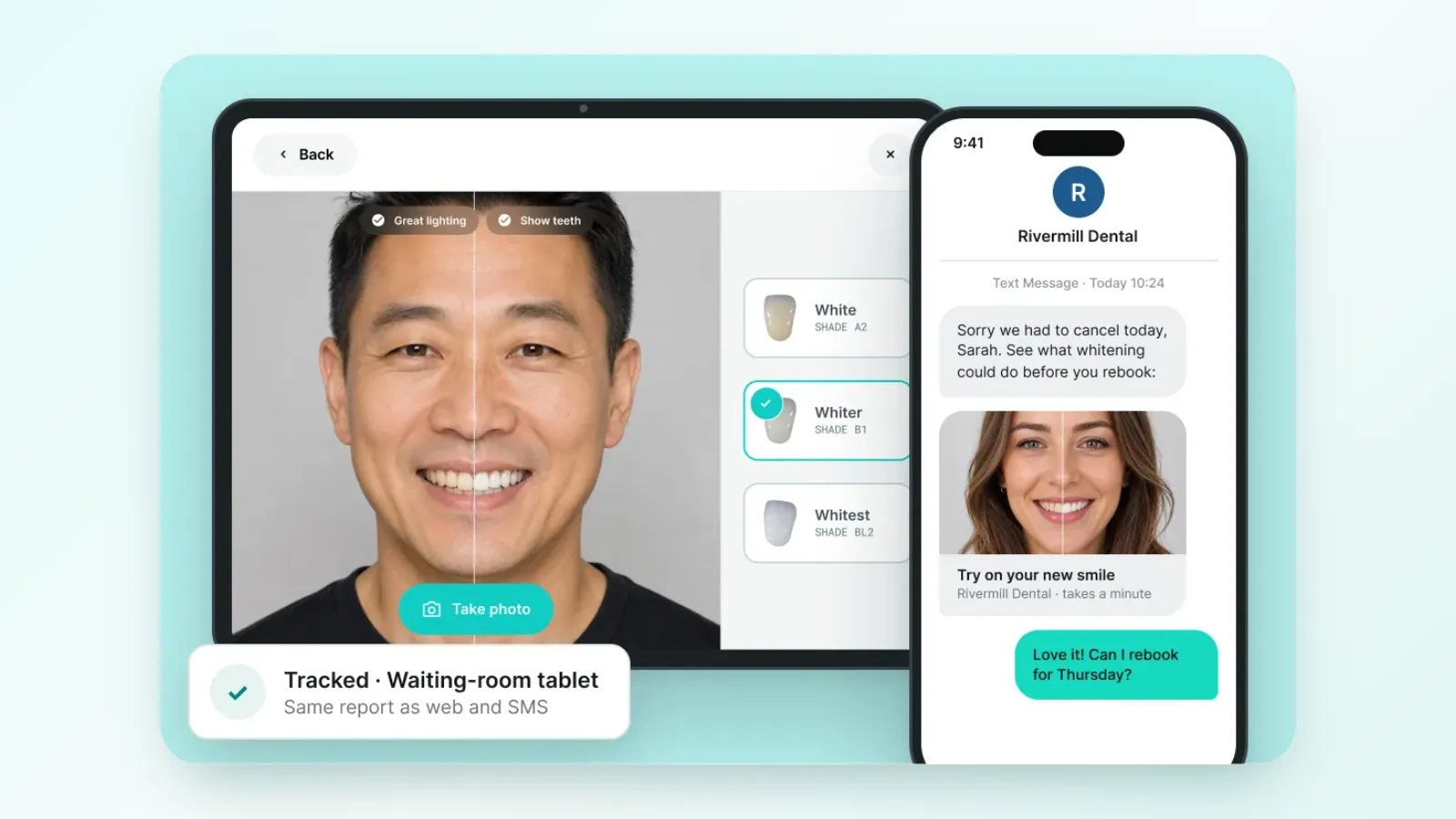
That is the job Your Social Smile does. Patients try a treatment on their own photo on your website or a waiting-room tablet, and the booking request arrives in your Bookings queue with the before and after attached, ready for whoever calls them back. The platform shows how many patients tried each treatment and asked to book, which is the start of the path your case acceptance rate measures the end of.
For the number to watch before the consultation, see our post on patient engagement time.
Is case acceptance the same as conversion rate?
They overlap. Conversion rate usually describes new patients, from first inquiry to first appointment. Case acceptance starts after the exam, from treatment presented to treatment agreed. A practice can be strong at one and weak at the other, so it pays to measure both.