Dental Practice Marketing Strategies That Bring Patients In
How dental practices win new patients through Google, reviews, their website, ads they can measure, existing patients and the clinic itself.
By the Your Social Smile teamPublished 4 min read
Dental practice marketing is everything that brings new patients to a practice and gets them to book. That covers how you appear on Google, your reviews, your website, paid ads, referrals from existing patients and what people see in the clinic. For most practices the work goes in that order. Be easy to find, be trusted, make booking easy, then spend on ads you can measure.
Start with your Google Business Profile
When someone searches for a dentist near them, the map results come from Google Business Profiles. Google says local results are mainly based on relevance, distance and popularity, and that there is no way to pay for a better local ranking.
You can’t change your distance from the searcher. You can work on relevance and popularity. Choose accurate categories, list the treatments you offer, keep your hours and phone number current, add real photos of the practice and the team, and link the profile to your booking page.
Ask every happy patient for a review
Reviews are how people judge a practice they have never visited. In BrightLocal’s 2026 Local Consumer Review Survey, 97% of US consumers said they read reviews for local businesses. Google also says that more reviews and positive ratings can help a business’s local ranking.
Make asking a routine. Send a review link by text after the appointment, while the visit is fresh. Reply to every review, good or bad, briefly and without any patient details.
Never buy reviews or write them on patients’ behalf. In the US, the FTC’s 2024 rule on fake reviews and testimonials bans fake reviews, undisclosed reviews by staff, and paying for reviews that have to say something positive, and it lets the FTC seek civil penalties.
Make your website book appointments
Your website is where a search, an ad or a review turns into a booking, so judge it by bookings. Each treatment you want more of deserves its own page that says what it is, who it suits, roughly what it costs and how to book. Many visitors arrive on a phone, so keep the phone number and a booking button within reach of a thumb.
Before-and-after photos persuade, and they are also patient information. Use them only with the patient’s written consent. The rules are covered further down.
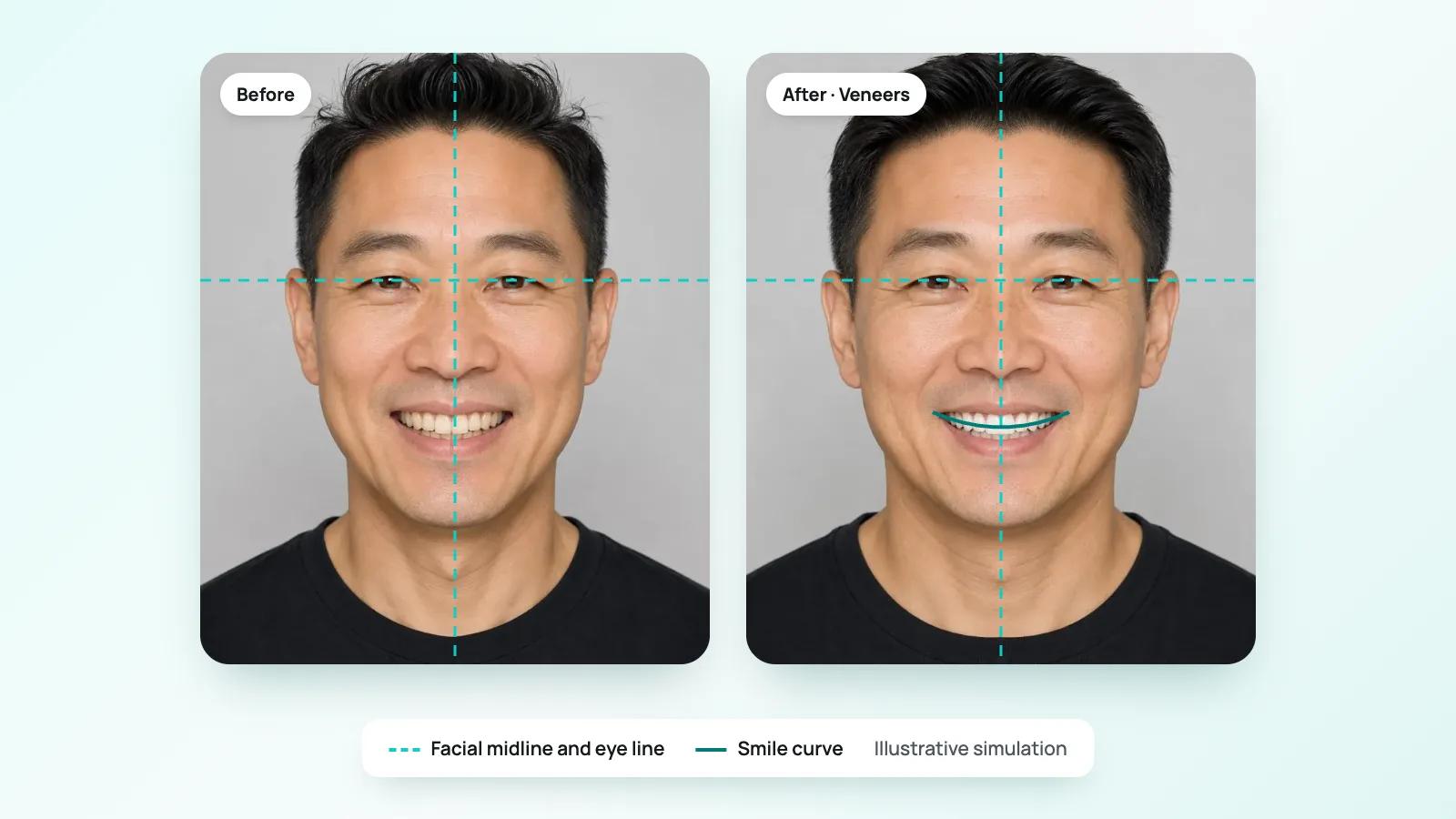
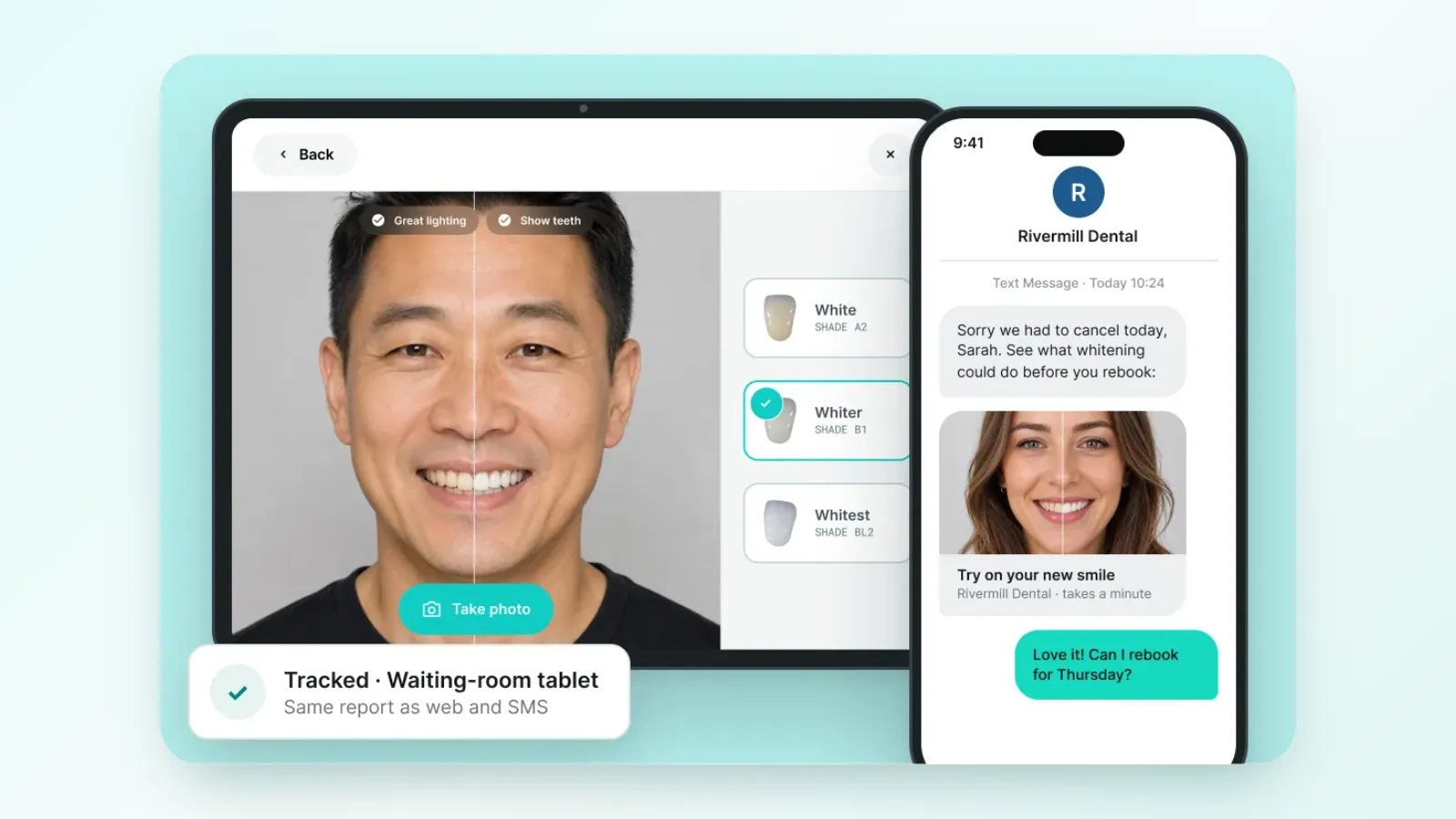
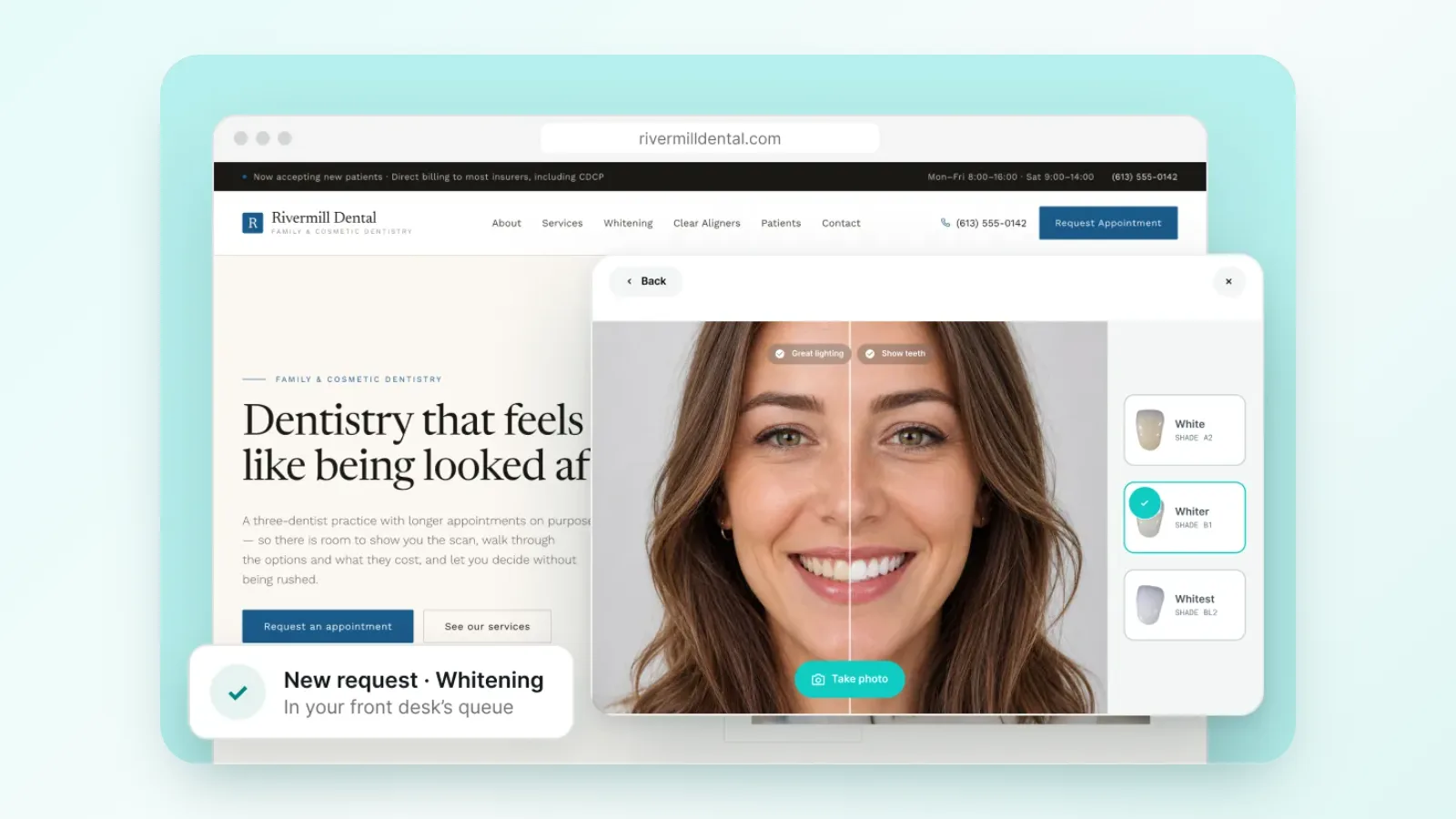
A smile simulator goes a step further than a gallery, because the visitor sees the treatment on their own face. With Your Social Smile, patients try teeth whitening, veneers, braces and other treatments on your treatment pages, and the booking request reaches your front desk with the before and after attached.
Run ads you can measure
Search ads reach people already looking for a treatment, such as clear aligners or teeth whitening near them. Social ads can reach people who are interested in cosmetic treatment but have not started searching.
Whichever you use, tag every link with UTM parameters, the short labels that tell your analytics which campaign a visit came from. Google’s guide to campaign URLs explains how. Then judge each campaign by what it costs per booked consultation. Clicks and likes don’t pay for chair time.
Market to the patients you already have
New patients are only half of it. Send recall reminders, contact patients who have not visited in over a year, and give happy patients a simple way to refer friends and family. These people already know and trust you.
Existing patients are also a strong audience for elective treatment. Someone in for a hygiene visit may never have asked about whitening or aligners because nobody suggested it.
Use the clinic itself
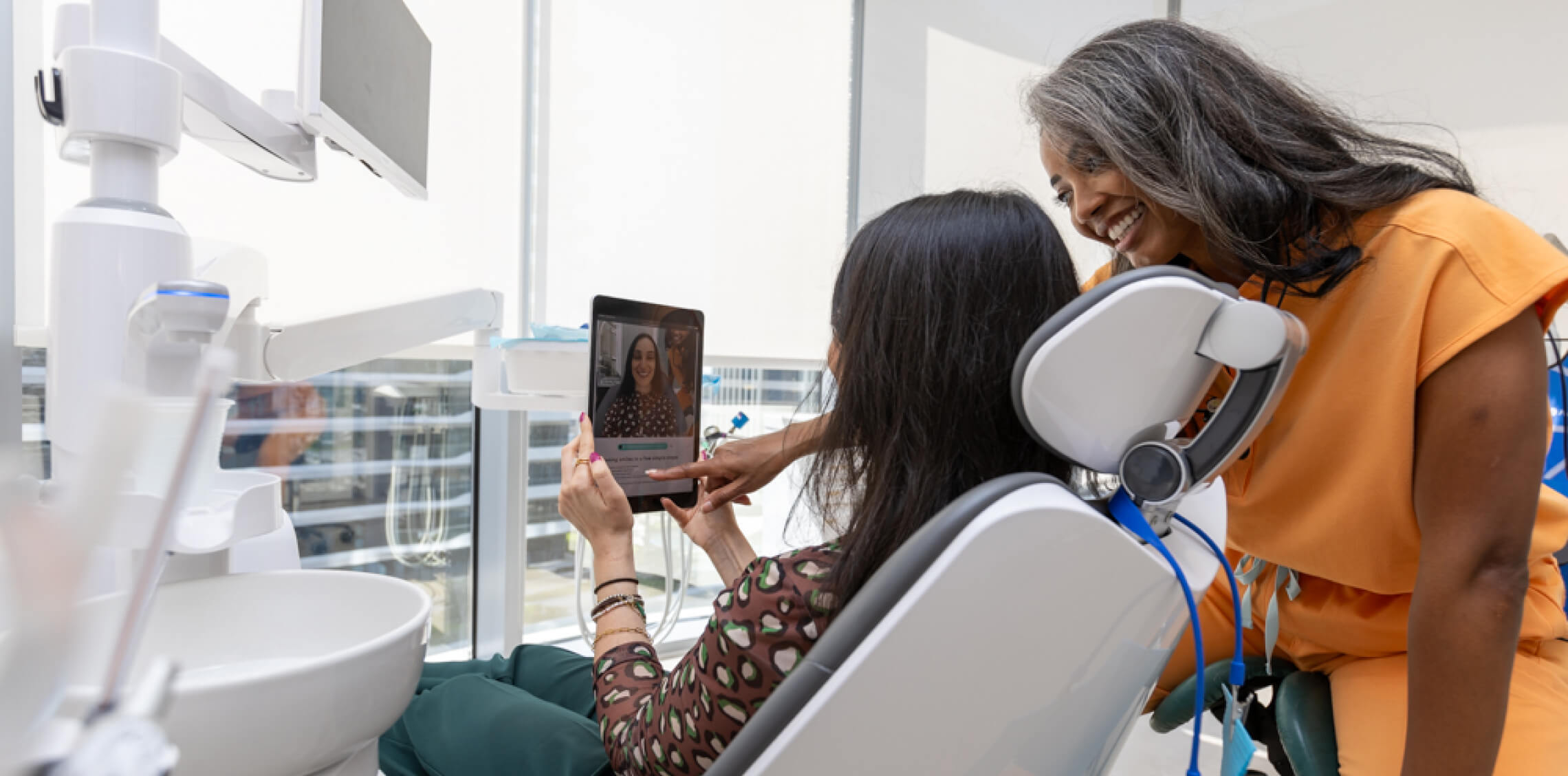
The waiting room, the chair and the checkout desk are marketing space you already pay for. Posters, tabletop stands and a screen in reception can each point patients to one treatment, and a QR code lets them try it on their phone before they leave.
The campaign tools in Your Social Smile turn these into print-ready media kits in your logo, colors and fonts, with a QR code on each piece that opens the simulator on the treatment you are promoting.
Run seasonal offers with an end date
A time-limited offer gives people a reason to book now instead of someday. A summer whitening offer or a new-year aligner offer works best when the treatment is clear, the price is stated and the end date is real.
In Your Social Smile you set the price and discount for each treatment, either ongoing or between two dates. The offer card shows patients how many days are left, and when the date passes the offer ends by itself. Check your regulator’s rules on advertised discounts before you launch one.
Keep your marketing within the rules
Dental advertising is regulated, and the rules differ by country and, in the US, by state. A few principles apply almost everywhere.
Be truthful. The ADA Code of Ethics (section 5.F) says no dentist should advertise in a way that is false or misleading in any material respect, and the UK’s General Dental Council expects advertising to be legal, decent, honest and truthful.
Get written consent before you use a patient’s photo, name or story. In the US, federal health privacy rules require a patient’s written authorization before a practice uses their health information for marketing, and that includes a testimonial with their name or face.
When you are unsure, your national association or regulator publishes advertising guidance. Checking first is quicker than taking a campaign down.
How do you measure dental marketing?
Count bookings by channel. For each source of patients, from Google and ads to referrals and the waiting room, track how many inquiries it produced, how many became booked consultations and how many started treatment. Divide what you spent by booked consultations, and you have a cost per booking you can compare across channels.
Your booking system can usually give you the first two numbers and your practice management software the third. The Your Social Smile platform shows which treatment each patient tried before asking to book, so you can see which treatments draw requests from your website. What happens after the consultation is a separate number, case acceptance.